Coordinator

Prof. Grigore Cican
Main topics
Cooperation
Cooperation with the Faculty of Aerospace Engineering.
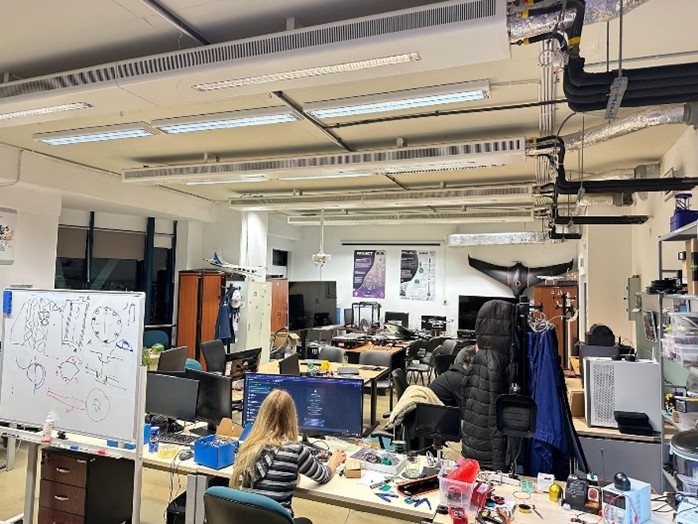
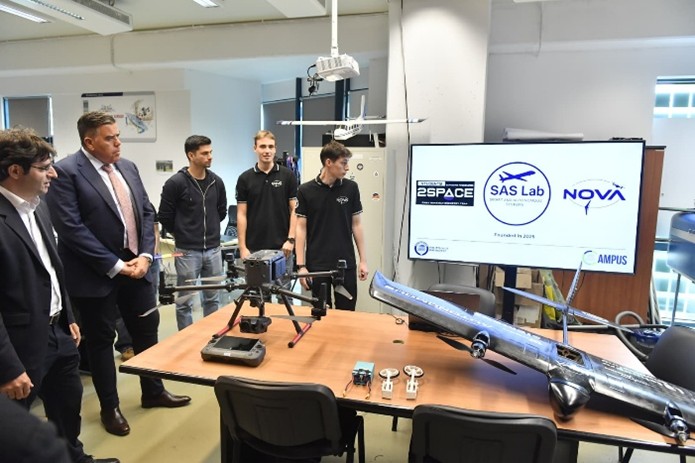
SAS Lab is an emerging research laboratory founded with the objective of developing and testing intelligent propulsion systems, control architectures, and software ecosystems for unmanned aerial platforms (UAVs).
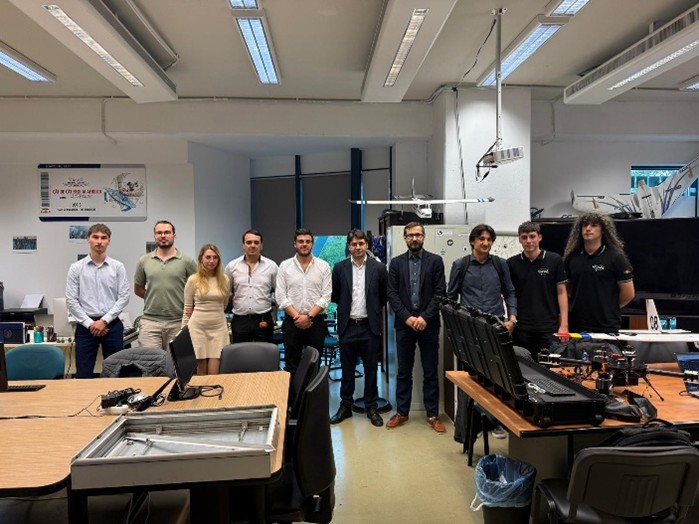
The laboratory consists of a team of over 10 senior researchers and doctoral students, with expertise in jet propulsion, autonomous navigation systems, and structural analysis.
The lab also hosts part of the research activities of members from the “2 Space” NGO, as well as students from the “EUROAVIA Bucharest” association, who are involved in applied projects dedicated to aeronautical system development. One of the strategic directions of SAS Lab is to support students in achieving high performance in national and international student competitions, by providing hands-on training and involvement in interdisciplinary research initiatives.
SAS Lab’s areas of expertise cover a wide range of advanced technologies for autonomous aerial platforms, with a focus on propulsion, control, and structural optimization. Research activities include the integration and performance analysis of UAVs powered by micro turbojet and turboprop engines, suitable for missions requiring high speed, extended endurance, and aerial reconnaissance capabilities.
The laboratory also explores the use of pulsejets as cost-effective solutions for demonstrative or tactical applications, as well as rocket engines for experimental setups and special-purpose missions. An important research direction concerns the reduction of thermal and acoustic signatures of UAV systems through passive methods (sound-absorbing materials, shielding) and active techniques (active noise control).
The lab is also involved in the evaluation and testing of alternative fuels such as bio-kerosene, e-fuels, ethanol, and other synthetic options, with a focus on sustainable and energy-efficient solutions.
Structurally, the research addresses aerodynamic and topological optimization of aerial vehicles, using computer-aided design methods to reduce weight, achieve strategic stiffening, and minimize drag. Smart actuators and adaptive control architectures are also developed and tested, along with distributed sensor systems for real-time monitoring of flight parameters and structural integrity (including inertial and vision-based navigation).
To support the integration of all these components, SAS Lab is developing a complete UAV software ecosystem, including autopilot, ground control station (GCS), payload control software, and advanced navigation modules.